Woman BRAGS About Expensive Nails WHILE ON FOOD STAMPS?!
This is actually ridiculous. WATCH:
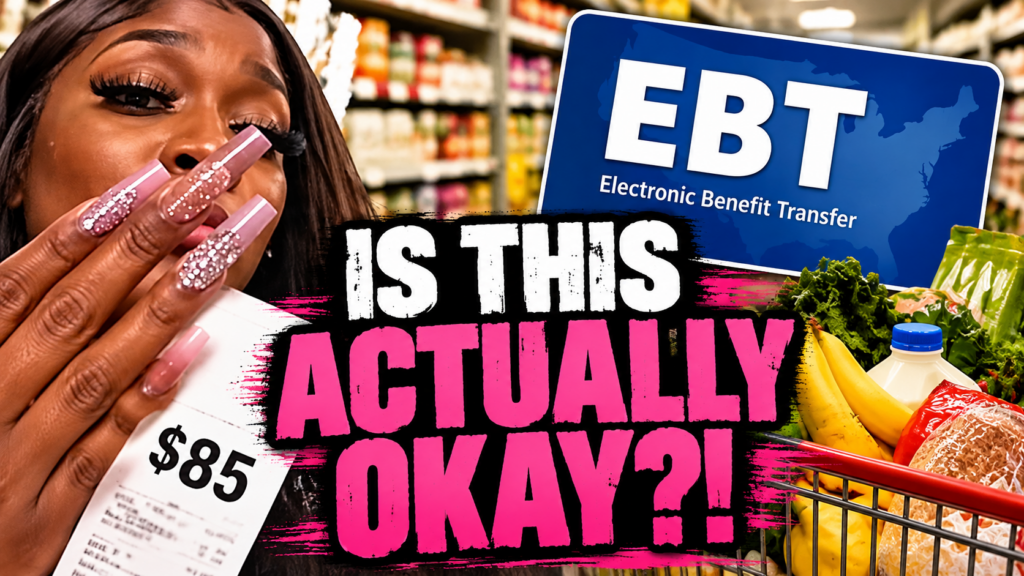
Background Info: In a video that rapidly circulated across social media platforms in September 2026, a woman described a confrontation at a Walmart checkout that left her indignant and millions of viewers furious. Standing in line with groceries, she pulled out an EBT card—the electronic version of Supplemental Nutrition Assistance Program (SNAP) benefits, commonly still called food stamps—only for the shopper behind her to comment on her freshly done nails.
The other customer had first complimented the manicure and asked the price. The woman replied that the set cost about $85. Once the EBT card appeared, the tone shifted: the shopper questioned how someone who could afford an $85 salon visit still needed taxpayer-funded help for groceries. The recipient’s response, later posted online, was blunt: “Yes, bitch. I’m sorry. I didn’t know that you can’t have your nails done and be on EBT. I didn’t know that was such a fucking crime.” She added that critics were simply “mad because you don’t qualify for EBT.”
The clip struck a nerve because it crystallized long-simmering frustrations about the boundaries of public assistance. Average SNAP benefits hovered near $188–$190 per person per month in fiscal 2025 and early 2026 data, with total program spending exceeding $100 billion annually for roughly 42 million participants. An $85 manicure represents a substantial fraction of that monthly allotment for one person—money that, if spent on food instead, could cover multiple grocery trips for many households.
Critics argue that the episode illustrates a substitution effect built into the program. Because SNAP covers food, other income becomes available for discretionary spending. When recipients then treat that freed-up cash as license for salon services, designer items, or other non-essentials while remaining on assistance, taxpayers who cannot afford similar luxuries themselves feel the arrangement is unfair. The woman’s defensive posture—framing scrutiny itself as the problem—intensified the backlash.
Defenders of the recipient counter that SNAP is a nutrition program, not a full income replacement, and that people retain the right to spend any non-SNAP money as they choose. Self-care, including manicures, can support mental health and employability; some point to stories of individuals using modest personal funds for small dignities amid hardship. Asset and income tests exist, yet many states use broad-based categorical eligibility that loosens strict resource limits, allowing households with certain other benefits to qualify more easily.
The viral exchange also highlights social-media dynamics. Posting the confrontation turned a private grocery-line disagreement into public performance. The recipient’s language framed entitlement to benefits as settled fact and criticism as envy, a rhetorical move that resonated with some audiences while alienating others. Similar clips involving hairstyles, eyelashes, or luxury goods alongside EBT use have circulated for years, feeding a genre of content that treats visible non-essential spending as evidence of systemic abuse.
Program rules themselves do not prohibit salon visits. SNAP benefits can only be spent on eligible food items at authorized retailers; attempting to use an EBT card for manicures is generally not permitted and can constitute fraud if cash is improperly extracted or benefits are trafficked. The distinction matters: the nails were almost certainly paid with other funds, yet the optics of concurrent luxury spending and assistance remain politically potent.
Fiscal context sharpens the debate. With participation near one in eight Americans and annual costs above $100 billion, even modest rates of discretionary spending enabled by benefits translate into large aggregate transfers. Error rates, overpayments, and documented fraud cases—ranging from trafficking of benefits to misreporting income—further erode public confidence, even when individual anecdotes do not prove widespread criminality.
Historical welfare reforms, including the 1996 changes that added work requirements and time limits for cash assistance, reflected similar concerns about dependency and incentives. SNAP retained a stronger work-support orientation in principle, yet enforcement varies by state and the program has grown substantially. The absence of a clear cultural expectation that recipients minimize non-essential spending while drawing public aid is what many observers find most striking in the viral video.
Counter-arguments emphasize dignity and the limits of judgment. Poverty is not uniform; a person may receive SNAP during a temporary setback while still possessing modest cash from prior work, family help, or side activity. Judging appearance alone risks overlooking disability, childcare barriers, or local labor-market conditions. Still, the recipient’s own framing—that the only relevant fact is her qualification for the program—sidesteps questions of priorities and opportunity cost.
Policy responses under discussion include tighter asset tests, stronger income verification, expanded work requirements, and restrictions on concurrent non-essential spending visibility, though the latter is difficult to administer without invasive monitoring. Some states already limit cash assistance use at certain venues; extending analogous norms or public expectations to SNAP remains contentious.
The $85-nails episode is not evidence that every SNAP recipient behaves identically, nor does it prove the program lacks any legitimate function. It does illustrate how visible mismatches between assistance and lifestyle choices, amplified by defiant online commentary, accelerate political polarization. Taxpayers funding the benefits experience the interaction as a lack of reciprocity; recipients and their advocates experience scrutiny as moralizing overreach.
Ultimately, the video forces a practical question: what social norms should accompany taxpayer-supported food aid? If the answer is that qualification alone settles all subsequent spending choices, public support for the program is likely to erode further. If the answer includes an expectation of restraint on non-essentials while receiving aid, then both cultural messaging and administrative rules may need adjustment.
Public reaction split along familiar lines. One side viewed the manicure as proof of misplaced priorities and a broken incentive structure. The other treated any criticism of a recipient’s personal spending as classist or punitive. The woman’s decision to broadcast her defense rather than ignore the comment or reframe it quietly turned a minor store interaction into a national talking point about responsibility, dependency, and the proper scope of the safety net.
Average benefit levels remain modest relative to the full cost of living for many households, which is why advocates stress that SNAP functions as a supplement rather than a complete replacement for earned income. At the same time, the existence of any disposable cash for an $85 service while claiming inability to cover basic groceries without public help invites scrutiny of whether current eligibility and reporting rules adequately capture available resources.
The broader conversation extends beyond one shopper. Recurring viral moments involving visible luxury alongside benefits have kept the issue of welfare optics alive for years. Each new clip reignites arguments about whether the program should prioritize nutrition alone or also reflect expectations of effort and thrift. Policymakers face pressure from both directions: expand access to reduce hardship, or tighten rules to restore perceived fairness and control costs.
For many working taxpayers who forgo similar personal spending, the combination of an $85 manicure and an EBT transaction at the same checkout registers as a visible transfer of their earnings to someone who appears able to manage discretionary costs. The recipient’s response—that qualification ends the discussion—left little room for that perspective and instead treated the question itself as illegitimate.
Whether this particular case involved temporary hardship, ongoing low earnings, unreported income, or simply different spending priorities cannot be determined from the video alone. What the episode does make clear is that large-scale public assistance programs operate under intense public observation, and individual choices that appear inconsistent with the stated purpose of the aid can quickly become symbols in larger debates about the size and design of the safety net.
Keep Reading
Kimberly Guilfoyle Is OUT! See Why:

Ilhan Omar Is In BIG TROUBLE!

Gunman Opens Fire On News Station

Ilhan Omar’s Explosive Wealth Scandal Exposed


Jerry Seinfeld Out-Heckles Pro-Palestine Protester

Join the Conversation
Share your perspective and reply to other readers.
Create your account
Create your free Chicks on the Right account without leaving this article.
Welcome back
Log in and continue the conversation on this page.